
El Raval is, probably, the Barcelona neighbourhood that has changed the most over the last thirty years, and the one that best preserves the soul of the working-class city. Far from the postcard image of the Gothic Quarter or the Modernista Eixample, El Raval offers a diverse, lively, unpolished Barcelona, full of corners you won't find in conventional guidebooks. This guide explains what to visit in El Raval and how to do it thoughtfully.
A neighbourhood that has lived a thousand lives
Until the 19th century, El Raval was an area of market gardens, convents and hospitals outside the city walls. Industrialisation filled it with factories and dense working-class housing, and in the 20th century it gained a reputation (not always deserved) as the "Barrio Chino" ("Chinatown"), associated with nightlife and dockside marginality. Since the 1990s, with the opening of the Rambla del Raval and the arrival of the MACBA, the neighbourhood has undergone a deep transformation without losing its popular, multicultural identity.
Today, El Raval is above all Barcelona's most diverse neighbourhood: communities from dozens of different countries live side by side with long-standing shops, cultural centres and a very lively arts scene.
What to visit in El Raval: must-see spots
- Rambla del Raval: the neighbourhood's new heart, with the famous Botero Cat as a meeting point.
- MACBA (Barcelona Museum of Contemporary Art): contemporary art surrounded by neighbourhood life, its square a well-known gathering spot for skaters.
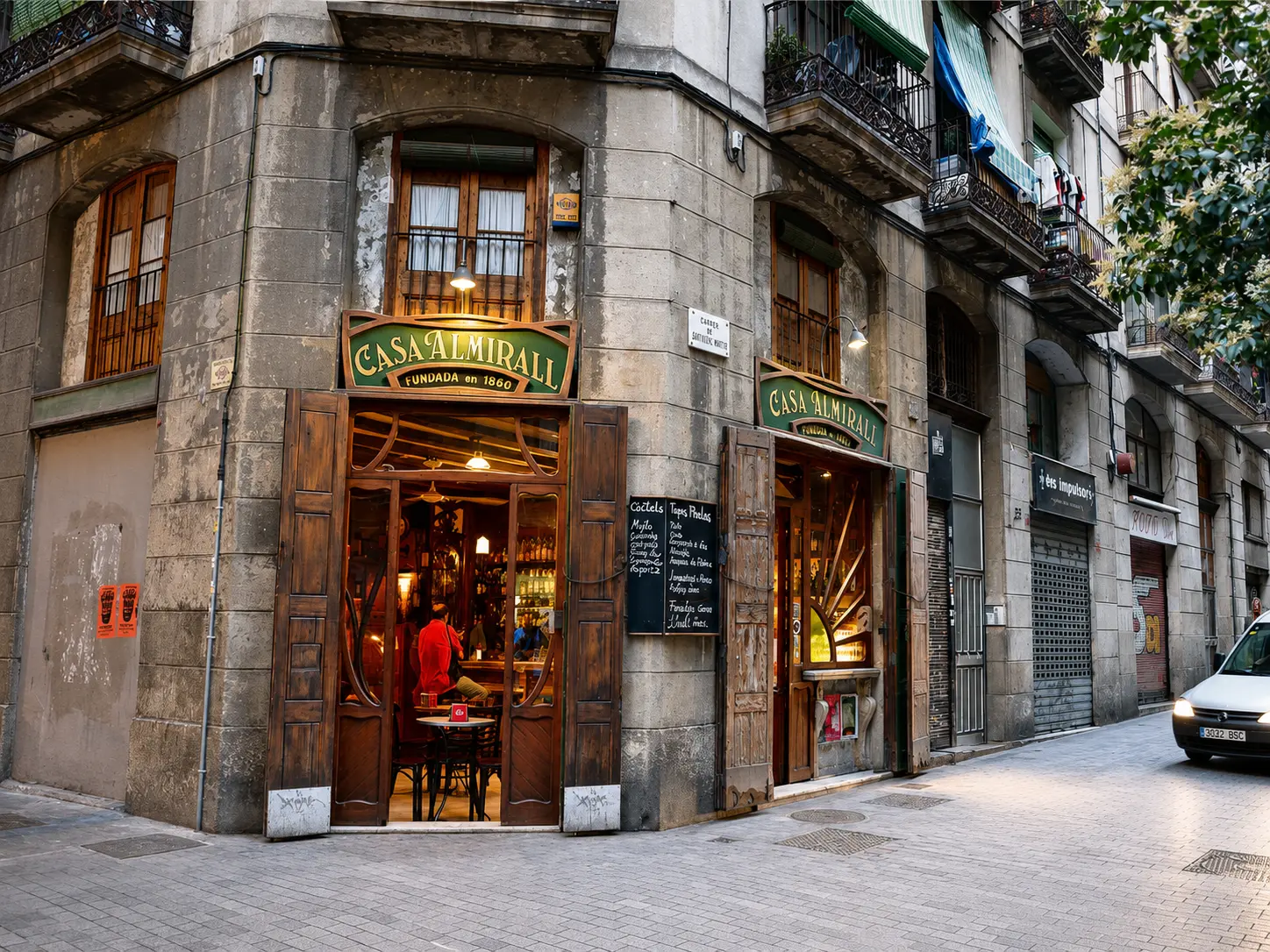
- Casa Almirall: one of the oldest Modernista taverns in Barcelona, open since 1860.
- Sant Pau del Camp: Barcelona's oldest Romanesque church, from the 10th century, often overlooked by mass tourism.
- Mercat de la Boqueria (Raval entrance): although usually associated with the Rambla, its rear façade opens directly onto El Raval.
- Filmoteca de Catalunya: one of the cultural venues that has helped transform Plaça de Salvador Seguí in recent years.
- Carrer de la Riereta and Carrer Robadors: streets that sum up the neighbourhood's contrasts well: everyday life, diverse commerce and working-class memory.
The Raval that doesn't make it into the guidebooks
Beyond the "official" spots, El Raval's real appeal lies in its everyday life: the taverns that have seen generations of dockworkers, the call shops and businesses run by the communities that have made the neighbourhood their home, and the local cultural centres that keep popular memory alive.
It's also one of the most contrasting neighbourhoods in the whole city: next to an internationally renowned contemporary art museum, you'll find shops that have been open for fifty years with barely a thing changed. This coexistence (sometimes tense, always interesting) is what makes El Raval a neighbourhood unlike any other in Barcelona.
Food and multicultural commerce in El Raval
One of El Raval's great, often underrated, draws is its food scene. Within a few streets, Pakistani, Filipino, Moroccan, Bangladeshi and Latin American restaurants sit alongside century-old taverns like Casa Almirall itself, or Bar Marsella, famous for its absinthe. This mix makes El Raval one of the best neighbourhoods in Barcelona for eating well and cheaply, far from the tourist menus of Las Ramblas.
The neighbourhood's commerce is equally diverse: international grocery shops, tailoring workshops, call shops and small family businesses coexist with art galleries and designer studios, in a sometimes fragile balance between gentrification and traditional neighbourhood life that is, today, one of the great urban debates in contemporary Barcelona.
Practical tips for visiting El Raval
- Best time of day: morning and afternoon are ideal for a relaxed stroll; at night the neighbourhood shifts pace and hosts much of the city's alternative nightlife.
- Safety: like any busy, central neighbourhood, the same common sense applies as in any big city: watch your belongings, especially at night.
- How to get there: the Liceu (L3) and Sant Antoni (L2) metro stops give direct access to the neighbourhood.
- Combine it with: El Raval connects directly with Las Ramblas and the Gothic Quarter, so it's easy to include it in a broader walking route through the historic centre.
Frequently asked questions about El Raval
Is it safe to walk around El Raval?
By day, El Raval is as safe a neighbourhood as any other in central Barcelona, with plenty of street life and open shops. At night, as in any busy central neighbourhood, we recommend the same common sense: avoid overly empty streets and keep an eye on your belongings in areas with more foot traffic.
Why was El Raval known as the "Barrio Chino"?
The nickname has no connection to the Chinese community; it became popular during the first third of the 20th century by association with similar districts described in some North American cities, linked to the neighbourhood's dockside nightlife. The term has since fallen out of use and is now considered inappropriate.
Is it worth visiting the MACBA from the outside, without going in?
Yes. The MACBA square, with its skater scene and young energy, is in itself one of the most distinctive spaces in the city, regardless of whether you go into the museum.
How much time do you need to visit El Raval?
With 1.5-2 hours you can cover the main spots: Rambla del Raval, MACBA, Casa Almirall and Sant Pau del Camp. If you want to explore more slowly, including a stop at one of its historic venues, allow half a day.
What's the difference between El Raval and the Gothic Quarter?
Although they're neighbours and both part of Ciutat Vella, they have very different characters. The Gothic Quarter concentrates Roman and medieval monumental heritage, with a more touristic, institutional feel. El Raval, on the other hand, is a working-class, multicultural neighbourhood, with fewer "official" monuments but a much more intense and genuine street life.
What's the best time to see El Raval without crowds?
Weekday mornings, before 11am, see the least footfall. On weekends, especially Sunday around midday, the Rambla del Raval and the area around the MACBA can get quite busy with locals and visitors alike.
Can you combine El Raval with a visit to Las Ramblas?
Yes, they're neighbouring districts and it's very common to combine them on the same walking route, since El Raval borders directly onto the western side of Las Ramblas and can be reached via several cross streets.
Is El Raval well connected to the rest of the city?
Yes, metro lines L2 (Sant Antoni, Paral·lel) and L3 (Liceu, Drassanes) run through or along its edges, making it easily accessible from anywhere in Barcelona.
Discover El Raval with a local guide
El Raval is a neighbourhood that especially benefits from a guided explanation: many of its most interesting corners (like Sant Pau del Camp or certain streets tied to working-class memory) go completely unnoticed if you don't know where to look. Our Hidden Corners of El Raval free tour covers these spots with a local historian guide, pay-what-you-want, in small groups.
If you'd rather explore on your own, we also offer a self-guided audio tour version, with the same content explained step by step.