
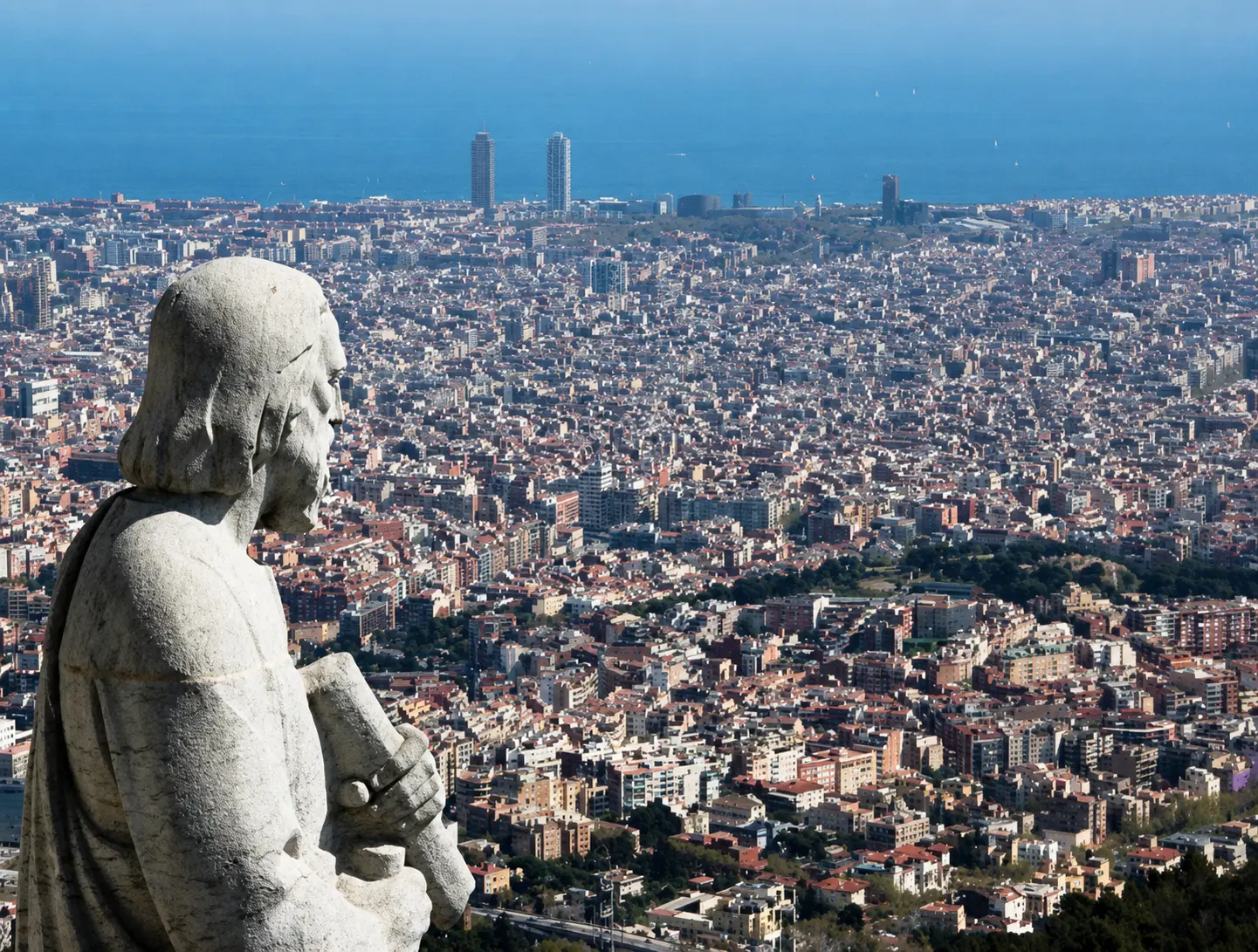
Barcelona is one of the cities with the highest density of tourist attractions in Europe: Modernisme, millennia of history, a beach, great food, and a street life that never stops. Precisely because of that, deciding what to see in Barcelona can feel overwhelming when your time is limited. This guide organises the must-sees by neighbourhood and theme, with itinerary suggestions depending on how many days you have.
Modernisme: Gaudí and beyond
- Sagrada Família: Antoni Gaudí's unfinished masterpiece and, by far, the city's most visited monument. We recommend booking tickets in advance.
- Park Güell: Gaudí's Modernista park, with panoramic views over the whole city and the sea.
- Casa Batlló and La Pedrera (Casa Milà): a few metres apart on Passeig de Gràcia, two masterpieces of Catalan Modernisme.
- Palau de la Música Catalana: a work by Lluís Domènech i Montaner, a UNESCO World Heritage Site.
- Hospital de Sant Pau: the city's other great Modernista complex, often overlooked by mass tourism despite its importance.
Historic Barcelona: Gothic Quarter, Born and Raval
If Modernisme is 19th- and 20th-century Barcelona, the historic centre is the two-thousand-year-old city. The Gothic Quarter concentrates the Roman remains of Barcino, the Cathedral and the medieval palace complex at Plaça del Rei. Right next door, the Born neighbourhood holds Santa Maria del Mar and Carrer Montcada, while El Raval offers the centre's most diverse, least touristy side, with the MACBA as its contemporary landmark.
This is precisely the area where a guided visit pays off the most: the historical density is so high that, without context, it's easy to walk past things without understanding what you're looking at.
20th-century memory and history
Barcelona is also a city marked by the Civil War and the 1936 social revolution. Places like Plaça de Catalunya, Las Ramblas or Paral·lel were the setting for events that changed European history. To dig deeper, our guide on what to visit on Las Ramblas explains the context, and our Memory of '36 free tour physically walks through the places where it happened.
Beach, sea and the Barceloneta
Barcelona is one of the few major European capitals with an urban beach. La Barceloneta, a former fishing neighbourhood turned leisure area, offers a seafront promenade, seafood restaurants and kilometres of sand just a few minutes' walk from the historic centre. If you're travelling in summer, it's worth setting aside half a day to combine history in the morning with the beach in the afternoon.
Must-see museums
- MUHBA (Museum of the History of Barcelona): the most immersive way to understand Roman Barcino, walking literally beneath today's streets. See all the details in our guide on what to see at the MUHBA.
- MNAC (National Art Museum of Catalonia): Romanesque and modern Catalan art, with spectacular views from Montjuïc.
- Museu Picasso: housed in five medieval palaces on Carrer Montcada, it holds the artist's early work.
- MACBA: contemporary art in the heart of El Raval.
Beyond the centre: Gràcia and Poblenou
If you have time beyond the essentials, two neighbourhoods deserve a special mention. Gràcia, a former independent town annexed by Barcelona in 1897, retains a village-within-the-city feel, with small squares, local shops and one of Catalonia's most celebrated festivals every August. Poblenou, the old "Catalan Manchester", combines 19th-century industrial chimneys with one of the city's quietest stretches of seafront, away from La Barceloneta.
This last neighbourhood is, in fact, the central setting of our Industrial Revolution free tour, which explains how industrialisation transformed Barcelona in the 19th century and the role the workers' movement played in it.
How many days you need to see Barcelona
It depends on your travel pace, but as a rough guide:
- 1 day: the Gothic Quarter in the morning (ideally with a guided free tour) and Sagrada Família or Park Güell in the afternoon.
- 2 days: add the Modernisme of Passeig de Gràcia, the Born and Santa Maria del Mar, and an afternoon at the beach.
- 3 days or more: round it off with Montjuïc and the MNAC, El Raval, and an extra museum depending on your interests.
In any case, we recommend setting aside your first morning for the historic centre and doing it with a guide: it's the most efficient way to get your bearings in the city and to gain the context that will help you enjoy the rest of your visit even more.
Frequently asked questions about what to see in Barcelona
What's the best time of year to visit Barcelona?
Spring (April-June) and autumn (September-October) offer the best balance of pleasant temperatures, long days, and less crowding than summer. Winter is also a good option if avoiding crowds is your priority, though some beach activities are off the table.
Is Barcelona an expensive city to travel to?
It depends a lot on the season and the type of trip. Accommodation and some touristy restaurants can be pricey, but the city also offers plenty of free or low-cost activities, like guided free tours, beaches or parks. Check our guide to free activities in Barcelona to plan on a tight budget.
Can you see the best of Barcelona in a weekend?
Yes, though it'll be a busy one. With two full days you can combine the historic centre (ideally with a free tour the first morning), the Modernisme of Passeig de Gràcia and Sagrada Família, and an afternoon at the beach or on Montjuïc, depending on your priorities.
Do you need to speak Spanish or English to travel around Barcelona?
Not essential, though it helps. Most tourist services run smoothly in Spanish and English, and our free tours are available in Catalan, Spanish and English depending on the route.
Which neighbourhoods can't I miss if I'm short on time?
If you only have one day, prioritise the Gothic Quarter and the Born in the morning, and Passeig de Gràcia with Sagrada Família in the afternoon. With an extra day, add El Raval and some beach time or Montjuïc, depending on your personal priorities.
Do I need to book tickets in advance for the most visited sites?
For Sagrada Família, Park Güell and Casa Batlló, yes: we recommend booking days or weeks ahead, especially in summer, to avoid selling out or facing long queues. Free tours, on the other hand, don't require that level of advance planning.
What's the best way to get around Barcelona?
The metro is generally the fastest way to move between distant neighbourhoods. For the historic centre, though, walking tends to be more efficient than any form of transport, since distances between points of interest are short and streets are often pedestrian.
What's the best neighbourhood to stay in when visiting Barcelona?
The Gothic Quarter, the Born and the Eixample are the most central, well-connected options for a first visit, since they let you reach most of the historic centre's attractions on foot and have good metro connections to the rest of the city.
The best way to start: a free tour through the historic centre
If you have to pick just one activity to start your visit to Barcelona, the recommendation is clear: take a guided free tour through the historic centre. In two hours, a historian guide will give you the context that will let you understand (and enjoy much more) the rest of the city over the following days. Our free tours are pay-what-you-want and also available as an audio tour if you'd rather go on your own.